Mindless Scrolling, Mindful Living: How Social Media Affects Our Mental Health
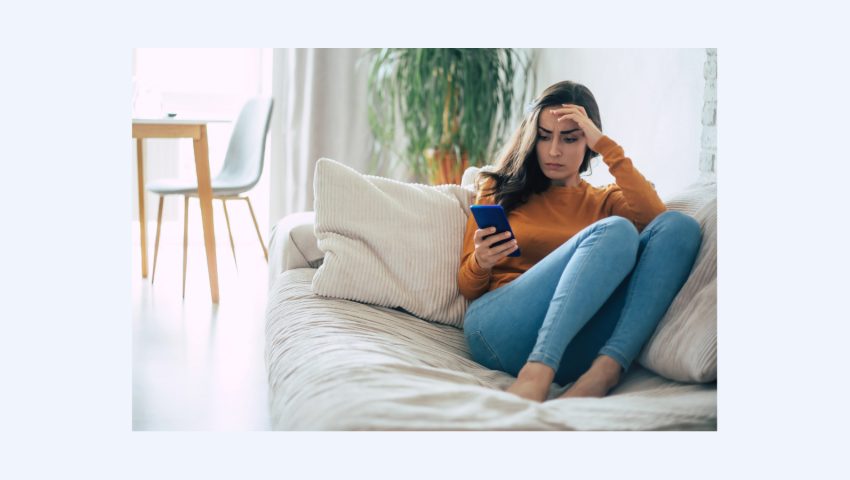
You pick up your phone for “just five minutes,” and suddenly an hour has passed.
You’ve watched strangers go on dream vacations, get engaged, land internships, post perfect selfies, and somehow wake up at 5 a.m. every day to journal, workout, and drink green juice before class. Meanwhile, you’re sitting in bed wondering why your own life suddenly feels behind.
Sound familiar?
Social media has become such a normal part of our everyday lives that we forget how deeply it affects our mental health. Especially for young adults, constantly seeing unrealistic standards can be mentally exhausting.
Recent research suggests that it's not simply the amount of time spent on social media that matters. Instead, patterns of addictive or compulsive social media use have been associated with negative mental health outcomes such as higher risks of anxiety, depression, and suicidal thoughts and behaviors. While social media isn't the only factor that affects mental health, how we use it can make a meaningful difference.
Social media can absolutely be a positive thing when it's used intentionally. It helps us stay connected, find communities, learn new things, and share our lives with others. But when scrolling becomes compulsive rather than intentional, it can begin to affect how we think about ourselves and our overall well-being.
One key reminder I try to keep in mind is this: social media shows moments, not the full story. It’s a highlight reel. We see the highs of someone else’s life while comparing them to our own lows. And that comparison is exhausting.
The loudest profiles can still hide the quietest struggles.
There’s an old saying (believed to be attributed to Aesop’s fable, The Tumbler) that says, “If everyone in the world wrote down their problems and put them in a jar, would you risk grabbing one, or keep yours?”
As a young adult myself, I understand how hard it can be to put healthy habits into action. I’ve told myself, “I’ll scroll for five more minutes,” only to realize I’ve been doom-scrolling for hours. Many of us have fallen into unhealthy scrolling habits at some point. This isn’t about making anyone feel guilty for being on social media. It’s about becoming more aware of how it affects us and learning how to use it in healthier ways. The goal isn't to avoid social media altogether, it's to recognize when it starts controlling you instead of you controlling it.
-
Curating your feed can help make social media a healthier and more positive space. One crucial thing you can do for your mental health is to be intentional with who you follow. Not every account deserves access to your mental space. If certain content triggers comparison, stress, or insecurity, just unfollow it. Instead, follow people who encourage, inspire, educate, or genuinely make you feel good. Your social media feed shapes your mindset more than you realize.
-
Setting healthy boundaries can help keep social media from becoming a habit that's difficult to control. Maybe that means not checking your phone first thing in the morning. Maybe it looks like turning your phone off when you eat or putting your phone away an hour before bed. Small habits can create healthier routines over time, and awareness is the first step toward change.
-
Social media is not all bad, but the key is balance. Instead of letting scrolling become your default, try replacing it with more intentional habits. Go for a walk. Text a friend. Journal your thoughts. Listen to music. Read a few pages of a book. Take your study break outside. Pick up photography, baking, or another hobby that makes you feel present in real life.
Social media lets us share our lives, but it should never replace living.
Your worth is not measured by likes, views, followers, or comments. Years from now, most people won’t remember how many likes you got on a post. They’ll remember your kindness, your attitude, your character, and the way you made people feel. Protecting your peace will always matter more than protecting your online image.
You were never meant to compete with millions of people every single day.
So, the next time you catch yourself scrolling mindlessly, pause for a second and ask yourself: Is this adding to my life, or taking away from it?
References:
Xiao, Y., Meng, H., Brown, T. T., Keyes, K. M., & Mann, J. J. (2025). Addictive screen use trajectories and suicidal behaviors, suicidal ideation, and mental health in US youths. JAMA, 334(3), 219–228. https://doi.org/10.1001/jama.2025.7829
Sharpe, A. T., Tyndall, I., Poulus, D. R., Obine, E. A., & Sharpe, B. T. (2026). The influence of doomscrolling on mental health: a scoping review. Mental Health and Digital Technologies, 1-53.
Avcı, G., Vampa, M., Kreso, I., Homaei, M., & Putra, O. P. (2026). Emerging evidence on doomscrolling: A scoping review of empirical studies. Journal of Social Media Research, 3(2), 162-171.